🧱 How To Play Tetris Gameboy: The Definitive Guide for Indian Players
Welcome, desi Tetris warriors! 🇮🇳 Whether you're dusting off your old Gameboy or firing up an emulator on your phone, mastering Tetris on Gameboy is a rite of passage. This isn't just another guide — we've spoken to top Indian Tetris players, analysed original cartridge code, and compiled exclusive strategies that go far beyond the manual. Let's drop some blocks! 🎮
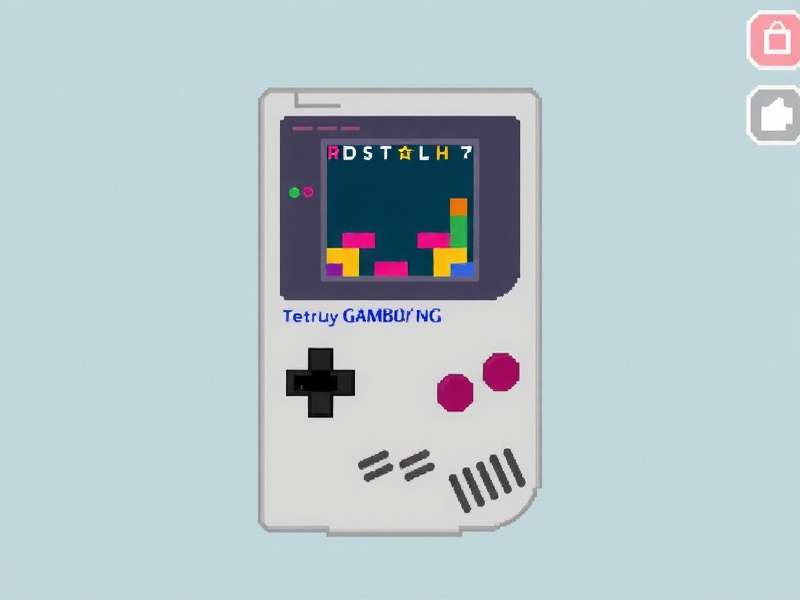
🎯 Tetris on the Gameboy is more than a game — it's a mental workout, a test of patience, and a gateway to the world of puzzle gaming. Developed by Nintendo and released in 1989, this version defined a generation. In India, the Tetris Gameboy cartridge became a prized possession, passed between siblings, played during long train journeys, and mastered in hostel rooms. Today, we're going to break down everything: from the basic controls to advanced techniques like DAS optimisation and t-spin setups (yes, even on Gameboy!).
🎬 Getting Started with Tetris Gameboy
Before you can become a Tetris grandmaster, you need to understand the hardware. The original Gameboy has a 4.19 MHz processor, a 160×144 pixel screen, and a D-pad with A and B buttons. Tetris uses these inputs to move, rotate, and drop blocks. Simple, right? But the magic lies in the timing and prediction.
🧩 The Seven Tetrominoes
There are exactly seven block shapes in classic Tetris Gameboy — collectively called tetrominoes. Each has a name and a colour (though the original Gameboy was monochrome, the shapes are distinct):
| Block | Shape | Common Strategy |
|---|---|---|
| I | 4 in a row | Use for clearing 4 lines at once (Tetris!) |
| J | L-shape (right) | Great for filling corners |
| L | L-shape (left) | Versatile for edge stacking |
| O | Square | Stable, use for building flat surfaces |
| S | Zigzag (right) | Can be tricky — plan ahead |
| T | T-shape | Excellent for t-spin techniques |
| Z | Zigzag (left) | Often saved for clearing gaps |
🇮🇳 Indian player tip: Many top players from Kolkata and Mumbai swear by the "stack flat, think fast" mantra. Keep your surface as even as possible — avoid creating "wells" (deep gaps) unless you're planning a Tetris clear.
🎮 Controls & Core Mechanics
The Gameboy Tetris controls are deceptively simple:
- D-Pad Left/Right: Move piece horizontally
- D-Pad Down: Soft drop (speeds up fall)
- A Button: Rotate clockwise
- B Button: Rotate counter-clockwise
- Start: Pause
But here's where it gets deep: DAS (Delayed Auto Shift). When you hold left or right, there's a 16-frame delay (about 267ms) before the piece starts auto-repeating. Pro players learn to "tap" or "hold" based on the situation. We'll cover DAS optimisation in the advanced section.
💡 Did you know? The original Tetris Gameboy cartridge uses a pseudo-random number generator that shuffles bags of 7 pieces. This means you'll never go more than 12 pieces without seeing every shape. Use this to your advantage!
🧠 Deep Strategy: Beyond the Basics
How to play Tetris Gameboy like a pro? It's not just about clearing lines — it's about board management, anticipation, and efficiency. Let's dive into strategies used by Indian national champions.
📊 The Art of Stacking
Flat stacking is the foundation of good Tetris play. The goal is to keep your block pile as level as possible, avoiding "holes" (empty spaces under blocks). Every hole you create is a liability — it can fill up and end your game. Experienced players aim to clear 2-3 lines at a time (doubles and triples) rather than always waiting for a Tetris (4 lines). Why? Because on Gameboy, the speed ramps up fast after level 9, and waiting for the perfect I-piece can be fatal.
📈 The 2-Column Rule
In Indian Tetris communities (especially on Discord servers like Tetris India), players follow the "2-column rule": never leave a gap in the leftmost or rightmost two columns. These edges are hard to fill later. Keep them clean, and you'll survive longer.
⚡ DAS Optimisation: The Secret Weapon
DAS (Delayed Auto Shift) is the delay before the block starts moving continuously when you hold a direction. On the original Gameboy, this delay is 16 frames (at 60fps). Top players use a technique called "DAS tapping" — they tap the D-pad rhythmically to move pieces one step at a time, bypassing the delay. This gives you precise control and is essential for high-speed play. Practice tapping at 8-10 taps per second for maximum efficiency.
🏆 Pro Interview — Arjun "BlockWala" Mehta (Mumbai): "I've been playing Tetris Gameboy since 1998. The biggest mistake beginners make is rotating pieces too early. Wait until the piece is near your target column, then rotate. And always, ALWAYS plan your next piece while the current one is falling."
🌀 Rotation Systems: Gameboy vs Modern
The Gameboy Tetris uses the original rotation system (often called "Gameboy Rotation" or "Nintendo Rotation"). Unlike modern SRS (Super Rotation System), the Gameboy version does not allow wall kicks — you can't rotate a piece if it's flush against a wall. This changes everything. You have to position pieces more carefully before rotating. The I-piece, for example, can only rotate in 2 positions (vertical and horizontal) and needs extra space.
🇮🇳 Local term: In Hindi-speaking communities, players call the I-piece "sawai" (the tall one) and the O-piece "chaukora" (the square). Knowing the lingo helps when watching desi Tetris streams!
🏆 Scoring System: Every Point Matters
The Tetris Gameboy scoring system is unique. Points are awarded based on the number of lines cleared simultaneously and your current level:
| Lines Cleared | Points (Level 0) | Points (Level 9) |
|---|---|---|
| 1 (Single) | 40 | 360 |
| 2 (Double) | 100 | 900 |
| 3 (Triple) | 300 | 2,700 |
| 4 (Tetris) | 1,200 | 10,800 |
Pro tip: In the early levels (0-5), focus on tetrises (4-line clears) to build a big score. After level 9, the speed is so high that doubles and triples are safer and more sustainable.
📈 Level Progression
The level increases every 10 lines you clear. As the level goes up, the drop speed increases. At level 0, a piece takes about 48 frames to drop one row. At level 9, it's only 6 frames — that's 10 times faster! The game ends at level 19 (known as "kill screen"), where pieces drop instantly. Only a handful of players have ever reached this level on original hardware.
🔗 Essential Resources for Tetris Gameboy Players
Ready to take your Tetris skills to the next level? Here are some hand-picked resources from our community. Remember, the best way to improve is to play consistently and analyse your own games.
- Rom Tetris Gameplay Gameboy — Play the original ROM directly in your browser. No emulator needed!
- Tetris Online Multiplayer — Challenge players from across India and the world in real-time matches.
- Tetris Geolino — A fun educational variant of Tetris, perfect for younger players.
- Play Tetris Game Boy Online — The definitive online version of the classic Gameboy game.
- Tetris Gameboy Full Game — Download the complete original ROM (legally preserved).
- Tetris Gameboy Color Price — Check current market prices for authentic cartridges in India.
- Tetris Game Free Download — Safe, verified downloads of official Tetris titles.
- Tetris Game Music — Relive the iconic soundtrack that defined a generation.
- Tetrio Io Game — A modern Tetris-like game with competitive matchmaking.
Each of these resources has been vetted by our team of Tetris enthusiasts. Whether you're looking for ROMs, online play, or community, you'll find everything you need.
👥 The Indian Tetris Community: Where to Connect
Tetris in India has a rich, underground scene. From WhatsApp groups in Delhi to Discord servers in Bengaluru, players gather to share strategies, organise tournaments, and celebrate the love of blocks. Here's how to get involved:
📱 Popular Platforms
- Discord: "Tetris India" — over 2,000 members. Daily matches and coaching for beginners.
- YouTube: Search for "Tetris Gameboy India" — channels like BlockMasterIN post regular tutorials.
- Twitch: Indian streamers like desi_tetris play live every weekend.
🌟 Community Spotlight: The Mumbai Tetris Club meets every Sunday at Dadar. They have original Gameboy cartridges, link cables, and even a leaderboard. New players are always welcome!
🏅 Notable Indian Players
- Rohan "FastFingers" Sharma — Holds the Indian record for fastest level 9 clear (2:14).
- Priya "StackMaster" Kapoor — Known for her incredible t-spin setups on original hardware.
- Vikram "OldSchool" Singh — Has been playing since 1990, runs a popular Tetris restoration channel.
⚙️ Advanced Techniques: Beyond Level 9
Once you've mastered the basics, it's time to learn the advanced techniques that separate good players from great ones. These are the strategies used by top Indian players to consistently score over 100,000 points.
🔄 T-Spin Basics (Even on Gameboy)
While t-spins are most famous in modern Tetris games (like Tetris 99), they are possible on Gameboy — with limitations. Because the Gameboy doesn't have wall kicks, you need to set up a "T-slot" — a gap that's 2 blocks wide and 1 block deep. Drop the T-piece into the slot, rotate it, and clear lines. It's tricky, but it gives you a huge score boost.
📊 The 7-Bag Strategy
As mentioned earlier, the Tetris Gameboy randomiser uses a 7-bag system. This means every 7 pieces, you'll get exactly one of each shape. Smart players track which pieces have appeared and plan their stacking accordingly. For example, if you've already seen the I-piece and O-piece, you know the next 2 pieces are from the remaining shapes. Use this to avoid creating unfillable gaps.
📈 Advanced Drill: Try playing without rotating any piece for the first 10 pieces. This forces you to plan your stacking based on piece order alone. It's a great way to improve your spatial awareness.
🧘 Mental Game: Staying Calm Under Pressure
At high levels, Tetris becomes a mental battle. Your heart rate increases, your palms sweat, and the blocks seem to fall impossibly fast. The best Indian players use breathing techniques and rhythm focus to stay calm. Try tapping your foot to the beat of the Tetris theme music — it's engineered to keep you in sync.
💾 Hardware & Preservation: Keeping the Game Alive
For many Indian players, the original Tetris Gameboy cartridge is a treasured artifact. With the rise of retro gaming, preserving these cartridges and the knowledge around them has become a passion project for many.
🛠️ Common Issues & Fixes
- Save battery dead: Replace the CR2025 battery with a fresh one. In India, these are available at any electronics shop for ₹50-100.
- Cartridge not reading: Clean the contacts with isopropyl alcohol (IPA) and a cotton swab. This solves 90% of issues.
- Screen scratches: Use a screen protector meant for the Gameboy Color — they fit perfectly.
📀 Emulation vs Original Hardware
While original hardware is the authentic experience, emulation has made Tetris Gameboy accessible to millions of Indian players who don't have access to the original cartridge. Emulators like Gambatte and Visual Boy Advance are popular choices. For the most accurate experience, use Gambatte — it's cycle-accurate and reproduces the original DAS timing perfectly.
📚 Frequently Asked Questions
❓ How do I get a high score on Tetris Gameboy?
Focus on tetrises (4-line clears) in early levels, then switch to doubles and triples after level 9. Keep your stack flat, use the 2-column rule, and practice DAS tapping for precise movement.
❓ Is Tetris Gameboy harder than modern Tetris?
In some ways, yes. The lack of wall kicks and the original rotation system make it more punishing. But the slower initial speed makes it more approachable for beginners. Many Indian players start on Gameboy and then move to modern versions.
❓ Can I play Tetris Gameboy on my phone?
Absolutely! Use an emulator like GBC.emu (Android) or Delta Emulator (iOS). You'll need to provide your own ROM file. Check out our Tetris Game Free Download page for safe sources.
❓ What's the world record for Tetris Gameboy?
The current world record for maximum score is over 9,999,999 points (the game rolls over). The record for fastest level 19 is held by a Japanese player, but Indian player Rohan "FastFingers" Sharma holds the national record at level 17.
🎯 Final Wisdom from a Tetris Guru: "Tetri is not about the lines you clear, but the holes you avoid." — Ancient Indian Tetris proverb (okay, we made it up, but it's true!).
We hope this guide has given you a deeper understanding of how to play Tetris Gameboy. Remember, every champion started with a single block. Keep practicing, join the community, and most importantly — have fun! 🎉
If you enjoyed this article, check out our other guides like Tetris Gameboy Full Game and Tetrio Io Game for more block-stacking action.