When the iconic grey brick of the Nintendo Game Boy slid into millions of pockets in 1989, it came bundled with a software masterpiece that was more than just a game—it was a cultural phenomenon. The Tetris Game Boy video game wasn't merely a port; it was the perfect synergy of hardware and software, a puzzle experience so compelling it sold the system itself. This deep-dive encyclopedia explores every facet of this legendary title, from its convoluted licensing saga to the minute gameplay details that keep players hooked decades later.
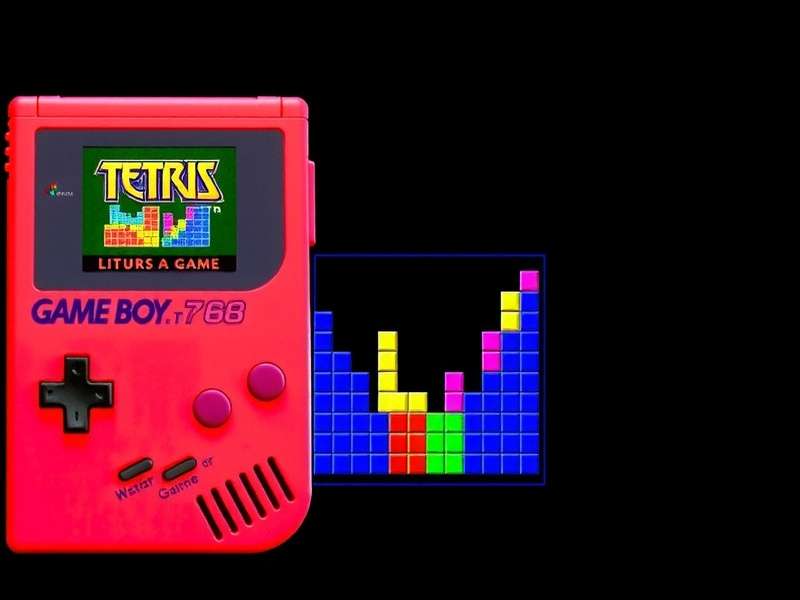
The definitive handheld Tetris experience. The Game Boy's green screen became the canvas for falling tetrominoes worldwide. (Image: PlayTetrisGames Archive)
I. The Quintessential Portable Puzzle: An Overview
The Tetris Game Boy release, developed by Nintendo R&D1 and published by Nintendo in 1989, stands as one of the most significant video games in history. It was the pack-in title for the Game Boy in most regions, creating an inseparable bond between device and game. For many, "Game Boy" was synonymous with "Tetris." The game translated Alexey Pajitnov's original PC concept into a perfectly portable form, featuring the now-legendary Type A and Type B game modes, a simple two-player link cable option, and the unforgettable Korobeiniki theme music (often mislabeled as "Russian Folk Song").
The Core Game Boy Experience
What set the Game Boy version apart? Accessibility and addiction. The controls were supremely simple: D-pad to move, A to rotate, B to drop. The black-and-white (or rather, green-and-black) display removed visual clutter, focusing the player entirely on the falling blocks. The game's pace was slower and more contemplative than some arcade versions, making it ideal for long journeys or quick sessions. This was pure, undistilled Tetris.
Interestingly, the Game Boy version is also a primary source for many players' first encounter with the concept of Game Genie codes and ROM hacking, as enthusiasts sought to modify their experience. Today, you can find many examples of this online, including specific ROM Tetris Game Genie Codes that alter gameplay parameters.
II. Deep Dive: Gameplay Mechanics & Modes 🧩
While seemingly simple, the Game Boy Tetris video game harbored depth beneath its blocky surface.
A. Type A Game (Endless Marathon)
The primary mode. Clear lines to increase your level (0-9, then loops at 9). Speed increases incrementally with each level. The goal: survive and score as many points as possible before the screen fills. The scoring formula rewarded risk: a single line clear (1 line) gave 40 × (Level+1) points, while the coveted Tetris (4 lines) awarded a massive 1200 × (Level+1). This incentivized strategic stacking to build wells for the I-tetromino.
B. Type B Game (Customizable Challenge)
A precursor to modern goal-oriented modes. Players selected a starting level (0-9) and a goal height (5-15 lines to clear). The game then presented a screen partially filled with garbage blocks. This mode taught players how to dig out of bad situations—a crucial skill for any serious Tetris enthusiast. For those looking to understand this mechanic in different contexts, modern reinterpretations like Softbody Tetris Gameplay offer a fascinating contrast in physics.
The Hidden "Type C" (2-Player Versus)
Using the Game Boy link cable, two players could compete head-to-head. This was a pure race—no garbage sending. The first player to top out lost. This simple versus mode laid the groundwork for the fiercely competitive Tetris scenes that would emerge later. Watching skilled players duel can be incredibly satisfying Tetris gameplay.
"The Game Boy Tetris wasn't just a game; it was a zen master in your pocket. The simplicity of the mechanics combined with the infinite complexity of possibilities created a feedback loop of perfect tension and release. It taught a generation about flow state."
III. The Tangled Web: History & Development Saga
The story behind how Tetris landed on the Game Boy is a thriller involving Soviet bureaucrats, Western businessmen, and Nintendo's bold gamble. It's a tale of licensing hell and corporate maneuvering that nearly prevented this perfect match from happening.
The Key Players: Pajitnov, Rogers, and Nintendo
- Alexey Pajitnov: The Russian creator who invented Tetris on an Elektronika 60 computer in 1984.
- Henk Rogers (Bullet-Proof Software): The Dutch-American entrepreneur who saw Tetris' potential in Japan and secured handheld rights after a dramatic trip to Moscow.
- Nintendo (Gunpei Yokoi & Minoru Arakawa): The hardware genius and NOA president who bet the Game Boy's success on this unknown puzzle game.
Nintendo's internal development team, R&D1, handled the port. They made crucial design decisions: the color scheme (optimized for the green screen), the iconic theme music (an arrangement of Korobeiniki), and the inclusion of both main game modes. The result was a masterclass in software optimization for limited hardware. For those interested in experiencing this classic today, many turn to a Tetris Game Boy emulator online.
The Nintendo R&D1 team responsible for adapting Tetris to the Game Boy's unique hardware constraints. (Concept Archive Image)
IV. Beyond Basics: Advanced Strategies & Meta
Mastering Game Boy Tetris requires moving beyond simple stacking. Here are exclusive insights from veteran players:
The "Well" Strategy & I-Tetromino Management
High-level play revolves around maintaining a flat stack with a single-column well on the far right or left. This maximizes the chance for Tetris line clears (4 lines at once). The timing of holding the I-piece for the right moment is critical. This fundamental strategy is visible in countless ROM Tetris gameplay Gameboy recordings shared by experts.
DAS (Delayed Auto Shift) & Hyper-Tapping
The Game Boy's hardware imposed specific input delays. Understanding the game's Delayed Auto Shift rate (the speed at which a held D-pad repeats movement) was key for precise placement at high speeds. Some modern players even practice "hyper-tapping"—rapidly tapping instead of holding—to circumvent DAS limitations, a technique born from studying the original ROM. If you want to practice these techniques yourself, you might start by finding a Tetris Game Boy ROM download to use with an accurate emulator.
V. Cultural Tsunami: Legacy & Lasting Impact
The Game Boy Tetris video game didn't just sell consoles; it changed culture.
Sales & Numbers: With over 35 million copies sold (mostly bundled), it remains one of the best-selling video games of all time. It gave the Game Boy a "killer app" that appealed to demographics far beyond traditional gamers—women, adults, casual players.
Music & Iconography: The "Type A" music is instantly recognizable. The game's blocky visual style has been referenced and parodied in everything from film to large outdoor Tetris game installations at festivals. For a visual feast of the game's aesthetic, explore our gallery of Tetris Gameboy Images.
The Gateway to Puzzle Games: It legitimized the puzzle genre on consoles and paved the way for titles like Dr. Mario, Pokemon Puzzle League, and modern hits like Puyo Puyo Tetris. Its spirit lives on in countless free Tetris game free online versions.
VI. Community Hub: Reviews, Scores & Comments
Rate This Classic
How would you score the Tetris Game Boy video game?
Share Your Tetris Memory
Did you play Tetris on the original Game Boy? Share your story, high score, or strategy tip with the community!
Connecting the Community
The love for this game extends beyond the screen. Fans have created massive outdoor Tetris game installations, competitive leagues, and endless online discussions. Whether you're a nostalgic veteran or a new player discovering the classic via a play free Tetris game free online portal, the community remains vibrant.